

Kitchen floor tiles go through a lot every day. From cooking and washing to moving appliances and cleaning up spills, they need to handle regular use. Over time, you may notice a cracked tile, loose edges, damaged grout or a hollow sound when you walk across the floor.
These problems might seem minor at first, but they can become more troublesome if left unattended.
If you are looking for kitchen tile repair in Singapore, the first step is to understand what has gone wrong and whether the affected tiles can be repaired or need to be replaced. The right solution depends on the condition of the tiles, the underlying surface and the extent of the damage.
Common Kitchen Tile Problems in Singapore Homes
Not every damaged tile needs the same repair. Here are some common issues homeowners may come across.
1. Cracked Kitchen Floor Tiles

A crack can appear after a heavy object is dropped on the floor. In other cases, the damage may be related to movement in the underlying surface or stress on the tile.
A small crack in one tile may be relatively straightforward to address. However, if several tiles are cracking in the same area, it is worth checking whether there is an underlying problem.
Replacing a damaged tile may be a suitable option if the surrounding tiles are stable and a matching replacement is available.
2. Loose or Hollow-Sounding Tiles

Have you noticed a hollow sound when tapping a tile or walking over a particular area?
This can sometimes indicate that the tile is not adequately bonded to the surface beneath it. However, a hollow sound alone does not always mean a tile is about to come loose.
If the tile moves, feels unstable or has developed cracks around its edges, arrange an assessment. Loose tiles should not be ignored, particularly in areas where people walk frequently.
The repair may involve removing the affected tile, checking the underlying surface and reinstalling a suitable replacement.
3. Popping Kitchen Tiles

Popping tiles are tiles that lift, bulge or come away from the floor. In some cases, several tiles may suddenly rise or detach from the surface.
This can happen for different reasons, including movement in the tiled surface, installation problems or stresses caused by changes in temperature and moisture conditions.
Popping tiles can create a trip hazard and may have sharp edges. Avoid walking over the affected area and keep children away until the problem has been assessed.
Do not try to force raised tiles back into position. The underlying cause should be checked before deciding on a repair.
4. Damaged or Discoloured Grout

Grout fills the joints between tiles. Over time, it can crack, crumble, discolour or become difficult to clean.
Damaged grout does not necessarily mean the tiles themselves need replacing. Depending on the condition of the joints and surrounding tiles, removing and renewing the affected grout may be sufficient.
If the grout keeps cracking or there are signs of moisture beneath the tiles, it is worth investigating further instead of simply covering the damage.
5. Stained or Chipped Tiles

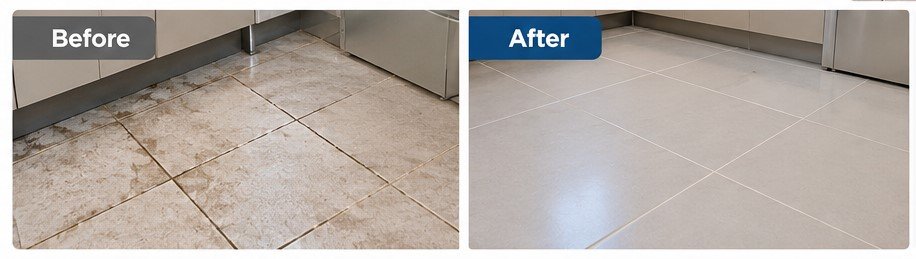
Kitchen floors can develop stains from food, oil and everyday use. A chipped tile may also have a rough edge that is difficult to clean properly.
Surface stains may respond to suitable cleaning, while deeper chips may require tile replacement. The best option depends on the tile material, finish and severity of the damage.
Should You Repair or Replace Kitchen Floor Tiles?
This is one of the first questions homeowners ask when they notice damaged tiles.
The answer depends on the condition of the floor and how widespread the problem is.
Repair may be suitable when:
The damage is limited to a small area.
The surrounding tiles are secure and in good condition.
The underlying surface is stable.
The affected grout can be renewed without replacing the tiles.
Tile replacement may be more appropriate when:
One or more tiles are badly cracked or broken.
Tiles have lifted or become unstable.
The existing tile cannot be repaired to a satisfactory finish.
Several tiles are damaged and the underlying cause needs attention.
Replacing individual tiles can help avoid disturbing the entire floor. However, the replacement tile may look slightly different because of changes in colour, finish, wear or product availability.
If several tiles are affected, it is worth assessing the whole area before deciding how much work is needed.
How Much Does Kitchen Tile Repair Cost in Singapore?
The cost of kitchen tile repair in Singapore varies from one project to another. A small repair involving a single accessible tile may require less work than replacing multiple tiles or dealing with a damaged underlying surface.
Several factors influence the quotation:
Number of damaged tiles: More tiles generally mean more removal and installation work.
Tile type and size: Material, dimensions and availability can affect the work involved.
Access to the damaged area: Tight spaces or areas around cabinets and appliances may take longer to work on.
Condition of the underlying surface: Additional preparation or repairs may be necessary.
Matching replacement tiles: Finding a close match can be difficult, especially for older tile designs.
Removal and disposal: Existing tiles and debris may need to be removed and disposed of appropriately.
Rather than relying on a general price found online, describe the problem and arrange an assessment if needed. This helps establish the actual scope of work before a quotation is prepared.
Can You Replace One Kitchen Tile Without Replacing the Entire Floor?

Yes, replacing an individual tile is often possible, provided the surrounding tiles and underlying surface are in suitable condition.
The damaged tile is carefully removed, the area beneath it is prepared and a replacement tile is installed. The joints are then finished to match the surrounding floor as closely as practical.
There are a few things to consider before proceeding.
First, finding an identical tile may not be easy if the original product has been discontinued. Second, removing a tile can sometimes damage adjacent tiles, particularly if they are already loose or brittle. Finally, the condition of the underlying surface may affect the repair.
If you have spare tiles left over from your original renovation, keep them in a safe place. They can be very useful when individual tiles need to be replaced later.
What Should You Do If Your Kitchen Tiles Start Popping?
If your kitchen floor tiles suddenly lift or bulge, take the problem seriously.
Here is what you can do while arranging an inspection:
Keep people away from the affected area to reduce the risk of tripping or injury.
Avoid stepping on, hitting or forcing the raised tiles back into place.
Do not attempt to remove tiles yourself if they are unstable or have sharp edges.
Take a few photographs from a safe distance to show the affected area.
Contact a tile repair contractor to discuss the problem and arrange an assessment.
The important point is to identify why the tiles have lifted before choosing a repair method. Simply sticking the tiles back down may not address the underlying issue.
How to Choose a Tile Repair Contractor in Singapore
Before arranging kitchen tile repair, it helps to understand how the work will be assessed and what the quotation covers.
Consider asking the contractor:
Will the damaged tiles be inspected before the repair method is decided?
Is the underlying surface likely to need additional preparation?
Can a close match for the existing tiles be sourced?
Does the quotation include tile removal, installation materials and disposal?
How will the repaired area be finished?
Are there any limitations or additional costs that should be discussed beforehand?
A clear explanation of the proposed work makes it easier to compare quotations and understand what you are paying for.
For HDB flats, condominiums and other properties, check any applicable building management requirements before arranging renovation or repair work.
Kitchen Tile Repair Services in Singapore
A damaged kitchen floor does not always mean you need to replace every tile. Depending on the condition of the floor, repairing a small area or replacing individual tiles may be a practical option.
Total Renovation provides renovation-related services in Singapore, including tile repair, tile replacement and floor tiling. If you have noticed cracked, loose or popping kitchen tiles, contact us to discuss the problem and determine whether a site assessment is appropriate.
Share a few details about the affected area, the type of tile and the extent of the damage. Photographs can also help explain the problem before an assessment.
Need help with damaged kitchen tiles?
Contact Total Renovation to discuss your kitchen tile repair requirements in Singapore and enquire about a quotation.

Frequently Asked Questions
Can cracked kitchen tiles be repaired?
It depends on the extent of the damage. Minor surface issues may have different repair options, but a badly cracked tile will often need to be replaced for a durable finish.
Why are my kitchen floor tiles making a hollow sound?
A hollow sound can indicate incomplete bonding beneath a tile, although it does not always mean the tile is loose. If the tile moves, cracks or feels unstable, arrange an assessment.
Are popping kitchen tiles dangerous?
Raised or detached tiles can create a trip hazard and may have sharp edges. Keep the area clear and arrange an inspection rather than trying to force the tiles back into place.
Can I replace just one kitchen floor tile?
Often, yes. The surrounding tiles and underlying surface must be in suitable condition, and a matching replacement tile needs to be available.
How long does kitchen tile repair take?
The time required depends on the number of tiles, the removal method, the condition of the underlying surface and the materials used. Some repairs may also require time for adhesives or grout to cure before the area can be used.
Do I need to replace all my kitchen tiles if one is damaged?
Not necessarily. If the damage is isolated and the surrounding floor is stable, replacing an individual tile may be sufficient. If multiple tiles are affected, the floor should be assessed before deciding on the extent of the work.
How can I get a quotation for kitchen tile repair in Singapore?
Contact a contractor with details of the problem, your property location and photographs if available. The contractor can advise whether a site assessment is needed before preparing a quotation.
Final tip: Keep any spare tiles from your original installation. They can make future repairs easier and help achieve a closer match with the existing kitchen floor.